
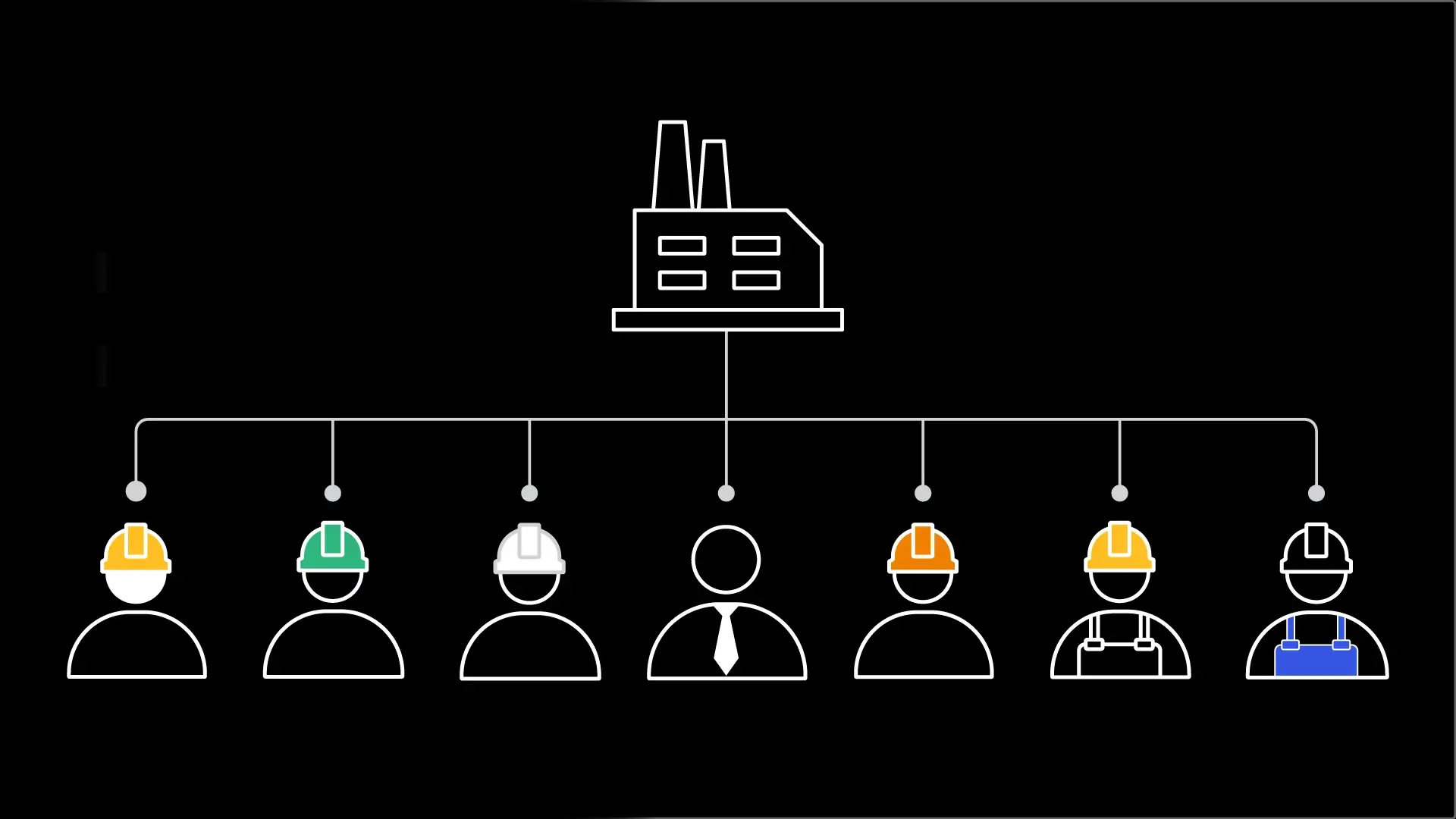
In my previous article, we explained what types of companies are involved in industrial automation, including end users, OEMs, System Integrators, and EPCs.
In this article, we'll walk you through the main job roles you'll find at an end user factory or plant. By the end of the video, you will know:
- The main job roles found at an end user factory or plant,
- What each role is responsible for, and
- How each role is measured through their key KPIs.
Let’s look at one of the most common roles found at end user factories and plants: the operator.
Operators
Operators run the machines and complete production tasks during normal operation. Their day-to-day work includes:
- Staging materials,
- Loading and unloading machines,
- Starting, jogging, and stopping machines,
- Recording production statistics, and
- Monitoring equipment.
Operator performance is typically measured on units produced per shift and line changeover times.
Most operator roles require a high school diploma at minimum, though more technical operator positions call for an associate's degree.
As modern facilities add more automation and data systems to the floor, we're seeing a clear trend toward more technical operators.
Operators keep production running, but when a machine breaks down, it's a different team that steps in.
Maintenance staff
Maintenance staff keep equipment running through both reactive and preventative work.
Reactive maintenance means responding to line stoppages, troubleshooting problems, and repairing or replacing components.
Preventative maintenance means scheduled inspections, cleaning, lubricating, and calibrating instrumentation before something breaks in the first place.
A maintenance engineer's performance is typically measured by minimizing unplanned downtime and mean time to repair, or MTTR.
Most maintenance roles call for a two-year associate's degree or equivalent experience, whether that comes from community college, a technical institute, military training, or an apprenticeship.
Beyond the qualification, a few things separate a strong maintenance technician from an average one, and they are not all technical. Working safely around live equipment and having a repeatable method for tracking down a fault count for as much as knowing the machine itself. We go through them in 3 skills that set you apart in industrial electrical maintenance.
Related Skillpath
Maintenance Automation
Learn practical techniques for industrial automation maintenance.
Manufacturing engineers
Manufacturing engineers focus on the production process itself, leading continuous improvement projects across the factory. For example, if a specific machine is bottlenecking a production line, a manufacturing engineer might lead a project to increase its throughput or reduce its downtime.
Manufacturing engineer's performance is typically measured on yield, quality, and overall line efficiency.
Many manufacturing engineers have a degree in electrical or mechanical engineering. Although most manufacturing engineers are not automation experts, they will pick up a lot of automation-specific knowledge on the job or through training.
Other engineers
Large end users often employ their own design, controls, electrical, and mechanical engineers as well. These engineers typically work on a design team, developing the standards and standard designs that OEMs and systems integrators have to follow when they build equipment for the plant.
In some cases, large end users even have in-house OEMs that build machines specifically for their own factories.
Smaller end users typically don't have these roles in-house and rely on OEMs and System Integrators to provide this expertise for them.
Operations
The operations team oversees production and makes sure lines run smoothly and efficiently. They work closely with supervisors and maintenance to plan work, set targets, and meet quality standards.
They also analyze production data to manage productivity improvement projects. In many facilities, operations teams now hold increasing budget authority over improvement projects, which is shifting more decision-making away from engineering and toward operations.
Operations teams' performance is measured on production volume, efficiency, and continuous improvement targets.
Quality Assurance (QA)
Quality Assurance is responsible for product quality throughout the production process. QA designs both automated and manual inspection stations along a line, and handles supplier component quality, defect analysis, and related improvement projects.
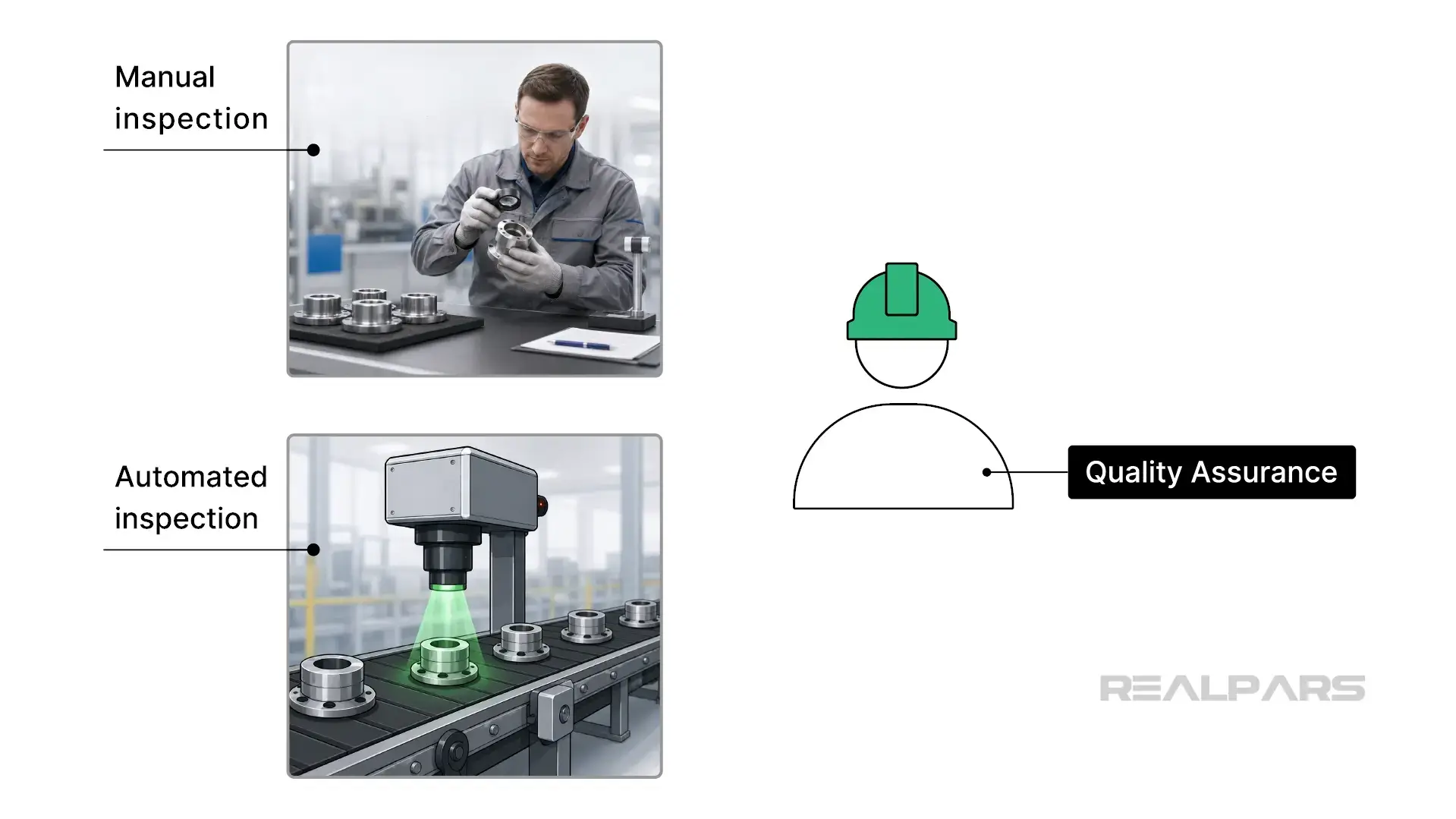
The key principle behind QA's work is that catching defects early allows for rework instead of waste. In general, the earlier a defect is caught, the cheaper it is to fix.
QA is measured on defect rate, typically expressed in parts per million, or PPM.
Environment, Health, and Safety (EH&S)
Environment, Health, and Safety, or EH&S, evaluates workplace risks and defines the procedures and equipment needed to mitigate them.
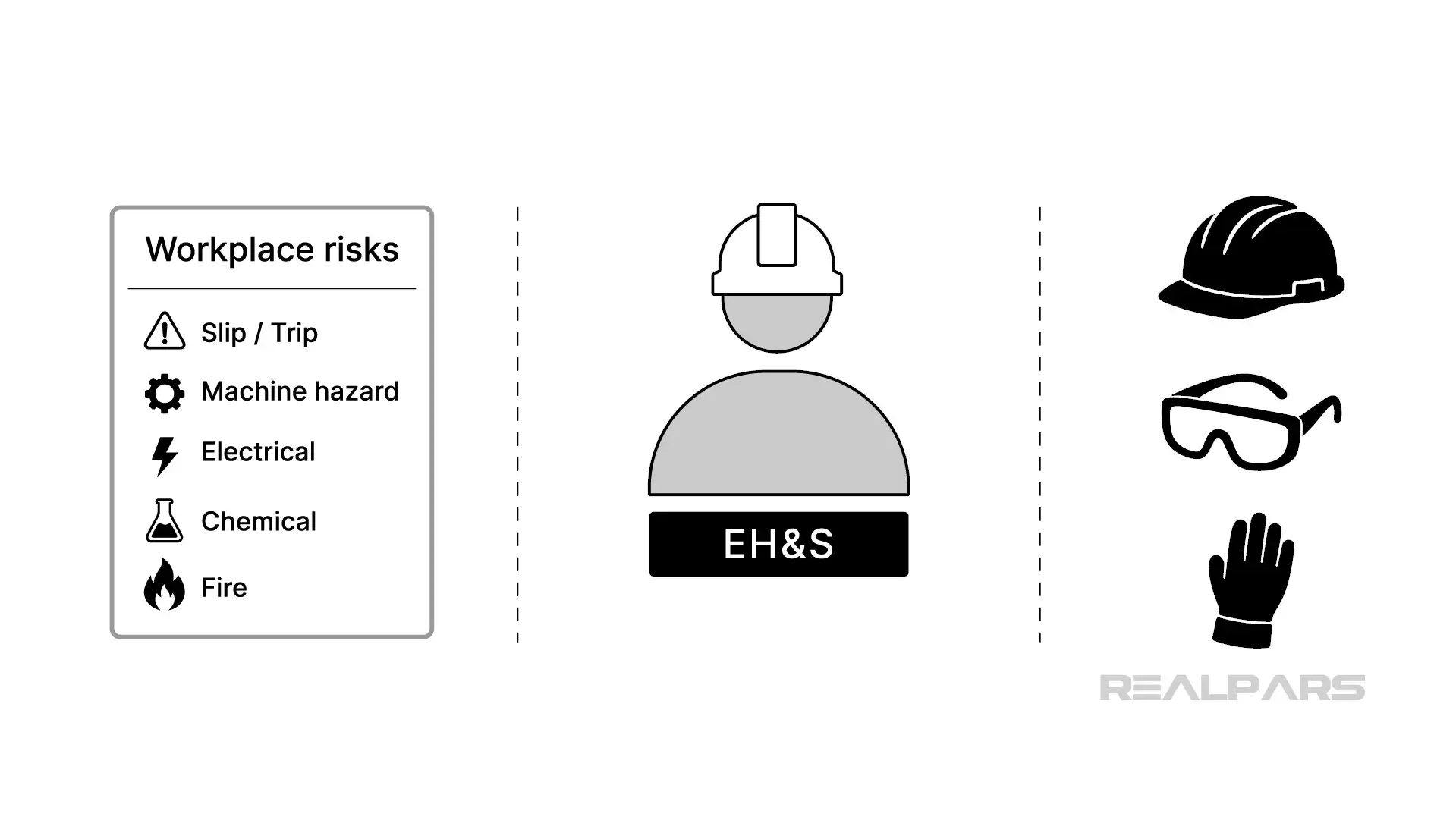
This includes enforcing safety rules, PPE requirements, and safety training participation. EH&S also looks beyond immediate physical risks to cover longer-term environmental hazards.
Environment, Health, and Safety, or EH&S, is measured on safety incidents, days since the last lost-time accident, and near-miss tracking. Interestingly, EH&S professionals often come from an HR background rather than a technical one.
Plant manager
Finally, the plant manager is responsible for every aspect of plant performance including production, quality, safety, delivery, and cost.
All of the roles we've covered in this video ultimately report up to the plant manager, which means they care about every KPI and metric across every department. The plant manager, in turn, reports to a VP or Director of Operations at the corporate level.
Wrap-Up
In this article, you learned the different job roles that exist at end user plants and factories.
Being aware of what roles exist and what each person in a plant or factory does can help with planning your career path and also understanding how your job role fits in with the larger eco system of a factory.

