

Today we’re going to talk about actuators. There’s probably not a day that goes by where you don’t use or encounter an actuator at home, or at work.
In this article, we’re going to:
– Explain the purpose of an actuator
– Discuss the 2 different types of actuators
– Look at the 3 typical sources of energy required for an actuator to move something
– Observe the operation of an actuator used in a very common industrial control application
– Look at how actuators are used in manufacturing and robotics
Everyday examples
In very simple terms, an actuator is a device that makes something move or operate. Every one of us takes advantage of at least one actuator every day. Let’s look at some examples of actuators.
1. Grocery store door
When we go to the grocery store, the door opens automatically for us. An actuator makes the door open.

2. Car seat
We can move the car seat forward or backward before we drive away in our car. An actuator makes the seat move.

Types of actuators
1. Linear actuator
An actuator can move something in a straight line, also referred to as linear.

2. Rotary actuator
Also, an actuator can make something move in a circular motion, also referred to as rotary.

What makes an actuator move?
We’ve talked about the movement of an actuator, but we haven’t discussed how, or what makes it move.
Actuators receive a source of energy and use it to move something. To put it another way, the actuator converts a source of energy into a physical-mechanical motion.
A butterfly valve is operated by turning the Handwheel connected to the rotary actuator. In industrial applications, the Handwheel could be replaced by one of three typical sources of energy, which can operate the rotary actuator:
– Electric actuators use some form of electric energy to operate.
– Hydraulic actuators use a variety of liquids as a source of energy.
– Pneumatic actuators are operated by compressed air.

Examples of actuators
Typical actuator types in the industry include:
– Electric Motors
– Hydraulic motors
– Pneumatic Control Valves

Let’s look at how pneumatic, electric, and hydraulic actuators are used in different applications.
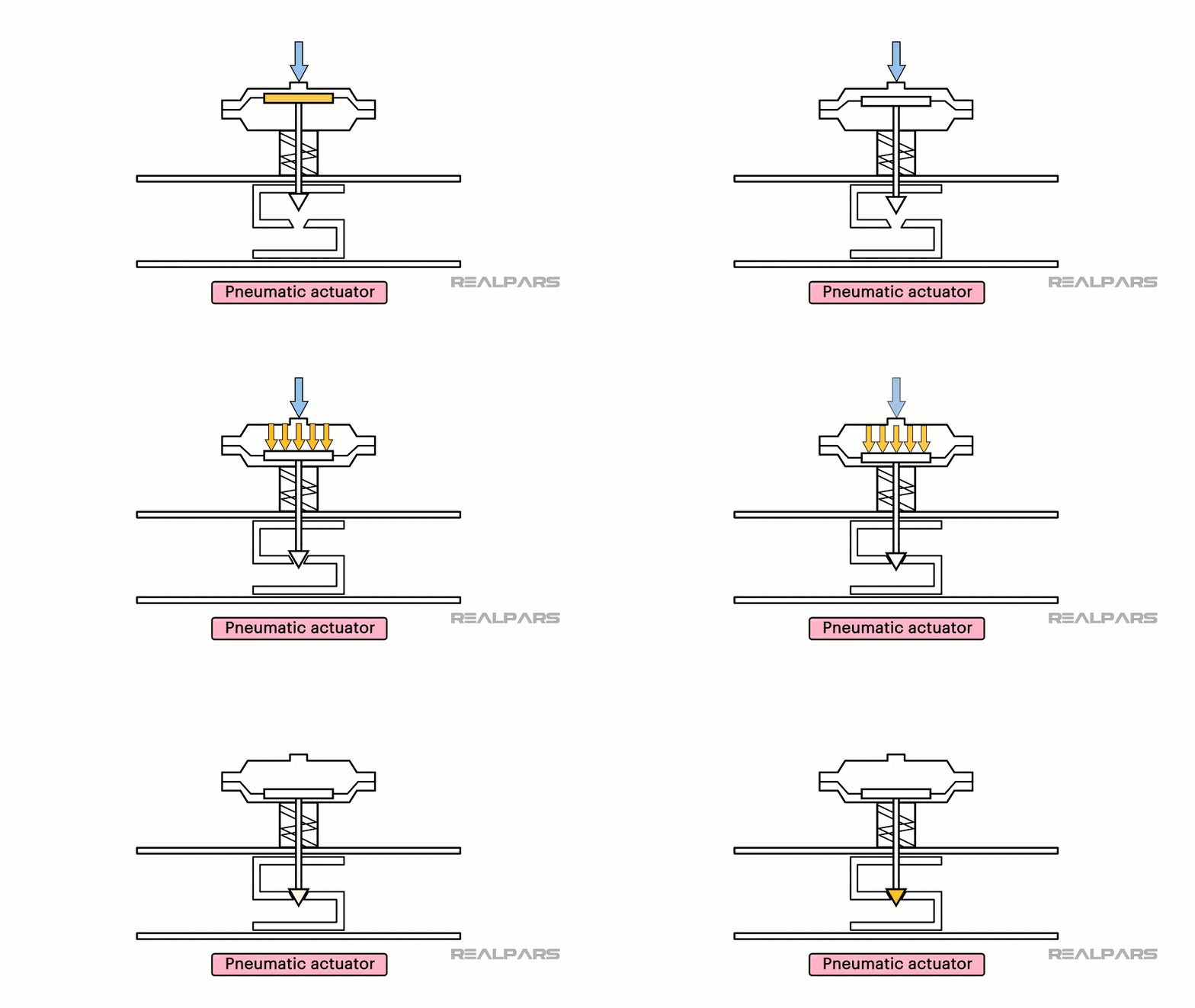
Pneumatic actuator
A pneumatic actuator receives a pneumatic signal through a top port. This pneumatic signal exerts pressure on a diaphragm plate. This pressure will move the valve stem downward in a way that moves, or strokes the control valve.
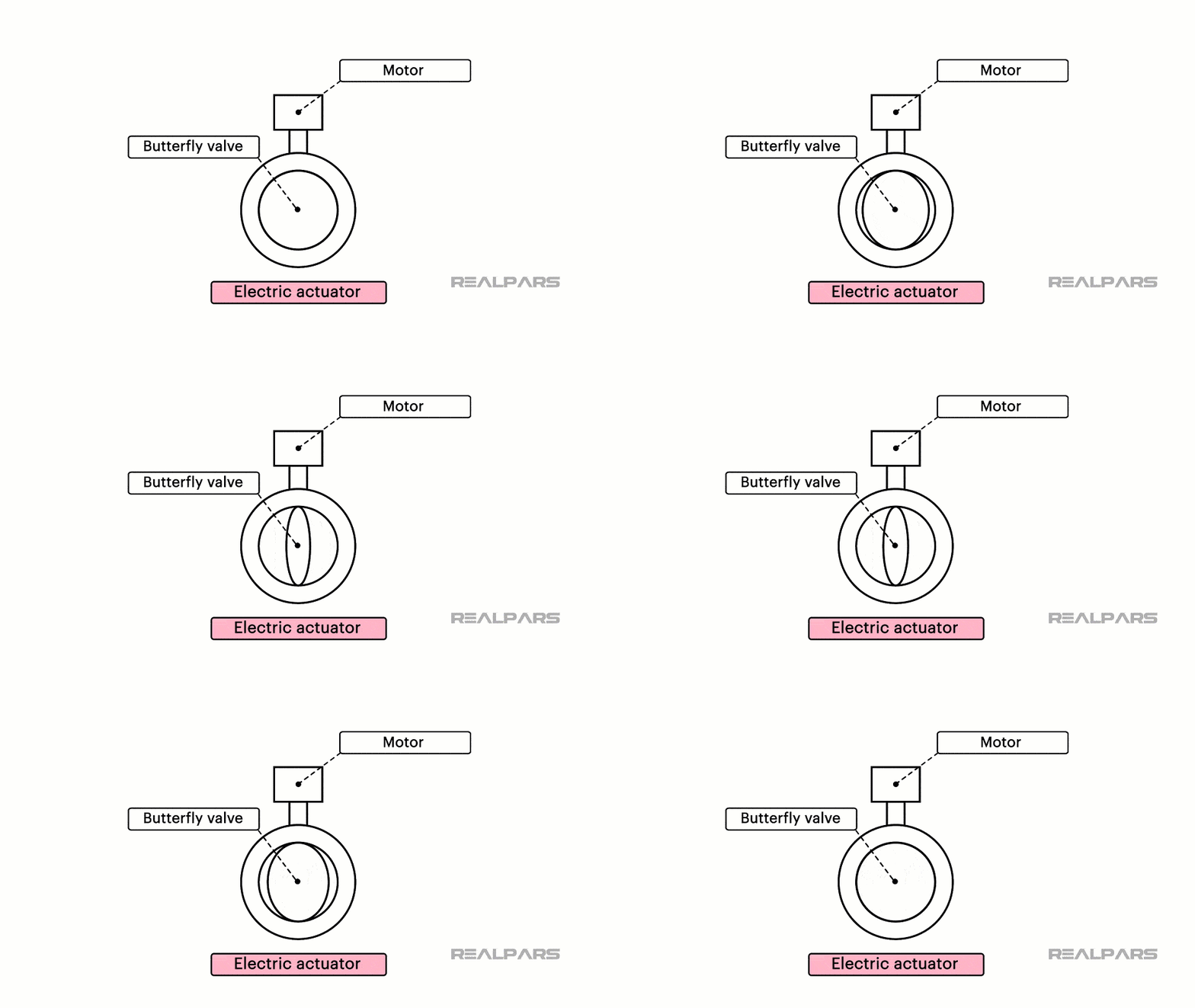
Electrical actuator
Here’s an example of an electrical actuator operating a butterfly valve. As the motor operates, the butterfly valve will open or close.
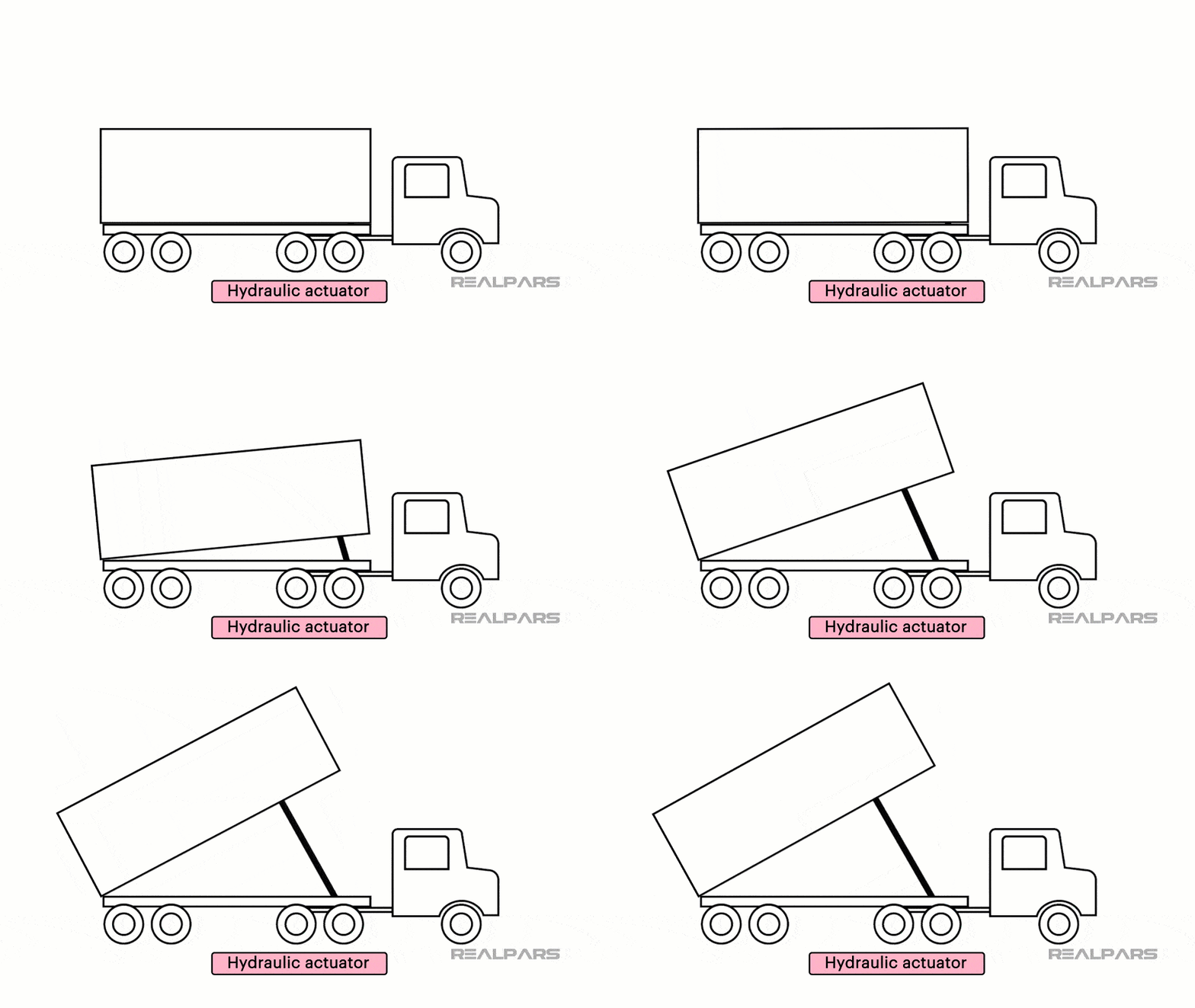
Hydraulic actuator
And finally, here’s an example of a hydraulic actuator on a dump truck. The extending hydraulic actuator lifts the box.
4-20 mA pneumatic actuator
Let’s look at a typical Pneumatic Actuator in action! The PLC analog output card produces a 4-20 mA current to move the valve from fully open to fully closed.
The 4-20 mA current will be converted to pneumatic pressure which becomes the source of energy to operate the actuator.

Importance of actuators in manufacturing
As the industry becomes more and more dependent on automated systems and machines, the demand for more actuators increases. Actuators are used extensively in a multitude of manufacturing processes such as assembly lines and material handling.
With the advances in actuator technology, there are a vast number of actuators at our disposal with different strokes, speeds, shapes, sizes, and capacities to best satisfy any specific process requirements.
Without actuators, many processes would require human intervention to move or position many mechanisms.
Actuators in robotics
This is a good time to introduce you to the device called a “Robot”.
A robot is an automated machine that can execute specific tasks with little or no human involvement and with speed, accuracy, and precision.
These tasks can be as simple as moving a finished product from a conveyor to a pallet.
Robots are very good at pick-and-place tasks, welding, and painting.
Robots are excellent at doing tedious repeatable tasks that were performed by a human a few years ago.
Robots can be used for more complex assignments such as manufacturing automobiles on an assembly line, or executing very delicate and precise tasks in the surgical operating room.
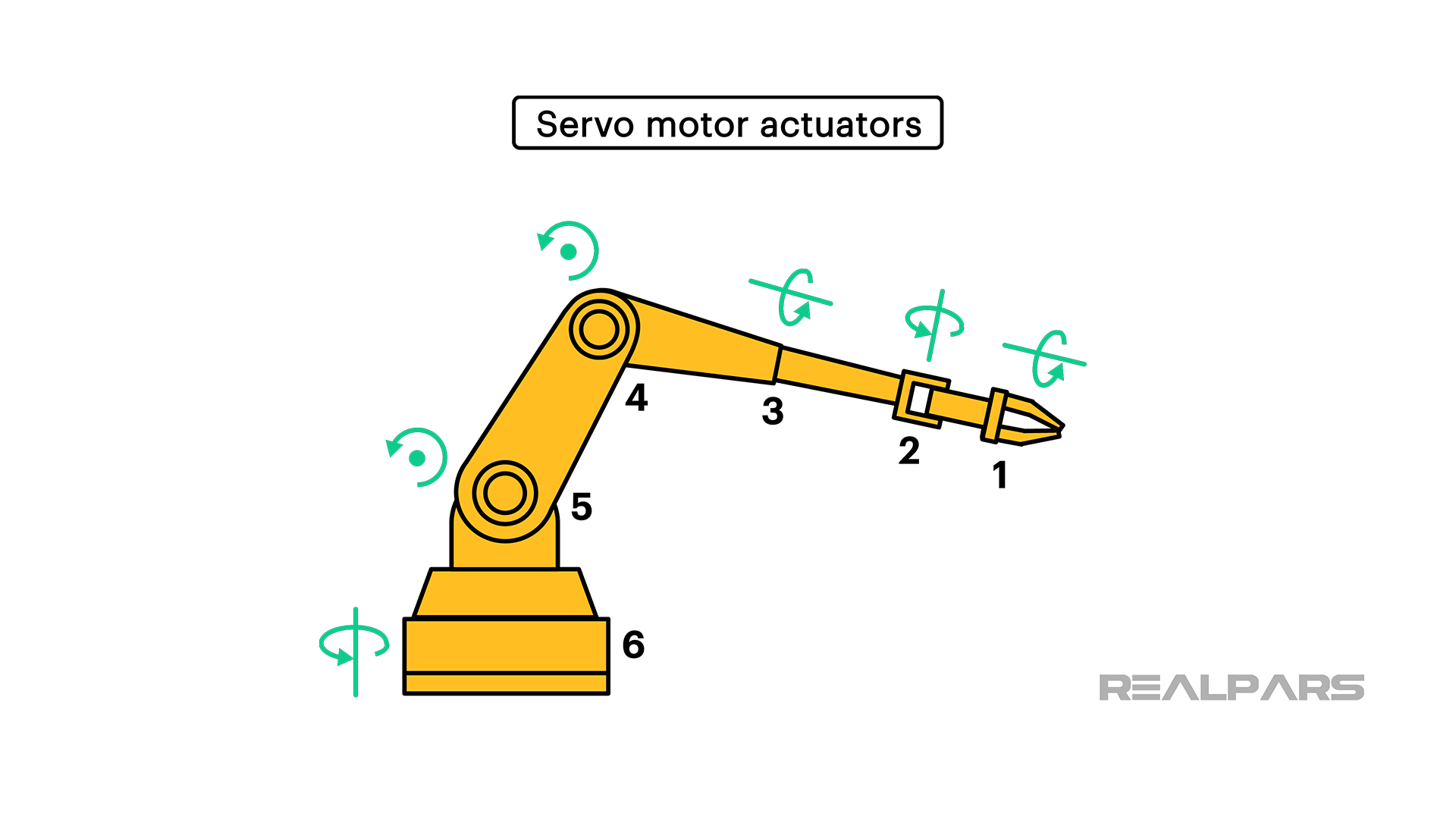
Robots come in many shapes and sizes. The type of robot is defined by how many axes are used. The main component of every robot is the servo motor actuator. For each axis, there is at least one servo motor actuator that moves to support that part of the robot.
For example, a 6-axis robot has 6 servo motor actuators. A servo motor actuator receives a command to go to a specific position and then acts on that command.
If you're interested in robotics, we have a great course in our robotics skill path that can help you identify different robot models, understand mechanical unit basics, and even guide you through installing Fanuc’s Simulator tool, Roboguide.
New trends in actuator technology
Smart actuators
We can’t end this article without discussing some of the new trends in Actuator Technology.
There’s a new device emerging called a Smart Actuator.
This Smart Actuator contains an integrated sensor. This device is capable of providing actuation or movement in response to sensed physical properties such as light, heat, and humidity.
You’ll see smart actuators used in applications as complex as nuclear reactor process control systems, and as simple as home automation and security systems.
Soft robots
Peering into the near future, we see a device called a “Soft Robot”.
What’s a soft robot?
A Soft robot has soft actuators integrated and distributed throughout the robot, unlike a Hard Robot with actuators for every joint.
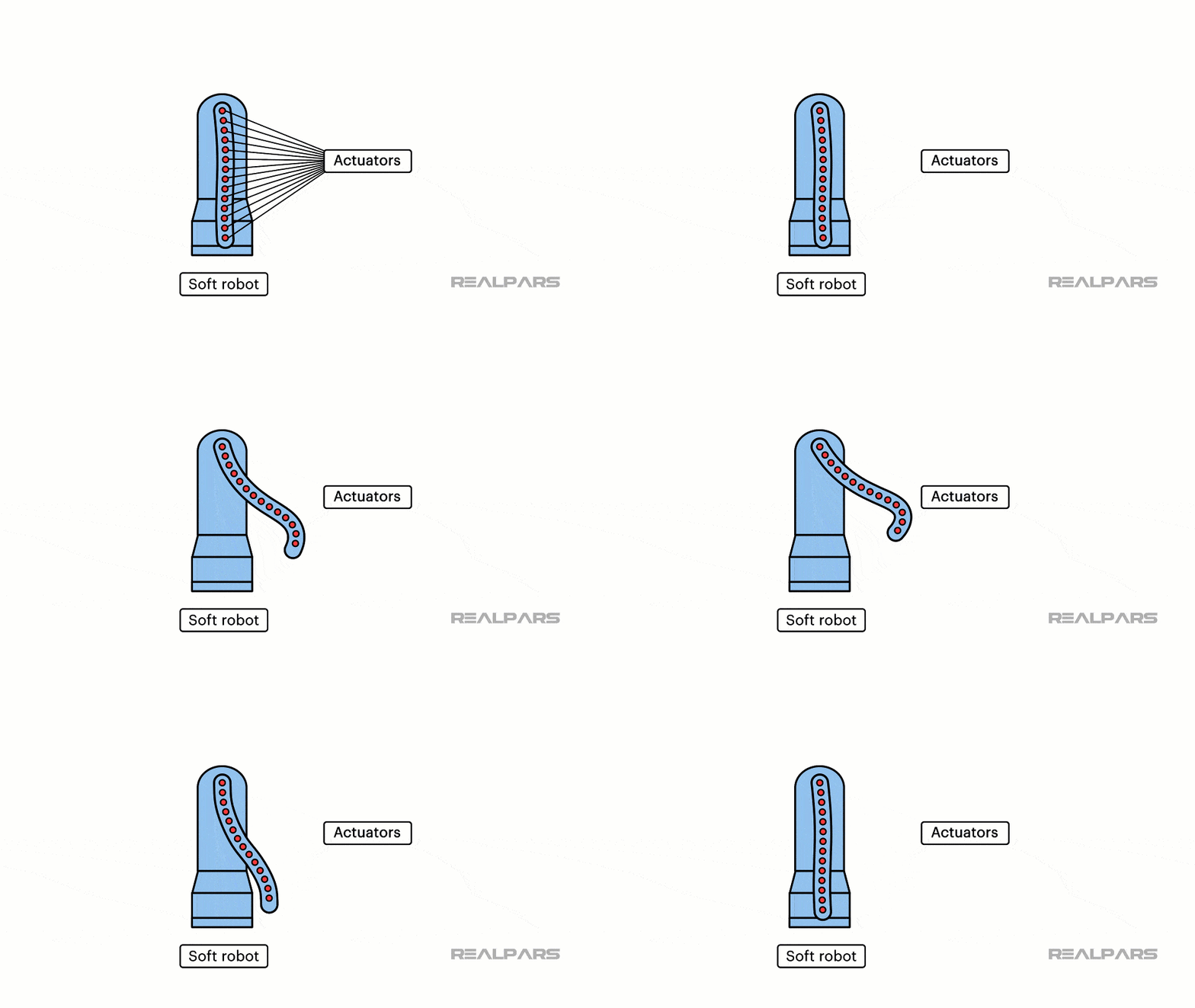
Adding Artificial Intelligence to the mix, Biomimetic intelligence provides a robot with the ability to learn new environments and the decision-making ability to respond to external changes.
Summary
Let’s review what we’ve discussed.
– An Actuator is a device that makes something move or operate.
– An Actuator can move something in a straight line, referred to as linear, or in a circular motion, referred to as rotary.
– An Actuator receives a source of energy and uses it to move something. In other words, it converts the source of energy into physical-mechanical motion.
That source of energy can be in 3 different forms:
– Pneumatic
– Electric
– Hydraulic
Typical actuators in the industry include:
– Pneumatic Control Valve
– Electric Motor
– Hydraulic Motor
Actuators are used throughout industrial automation and manufacturing, from control valves and material-handling systems to robots, where servo motor actuators provide precise movement for each axis.
We hope you enjoyed this article on Actuator, here at RealPars our team of experts is on hand to answer your questions and respond to your feedback.
Also, we’d love to hear your suggestions for topics you want our team to cover.
Of course, if you’re serious about wanting to learn even more, you can gain instant access to a large number of exclusive RealPars courses covering a variety of industrial automation topics, including PLC and HMI programming, DCS, IIoT, and others, all for a small yearly membership fee.
It’s an amazing value for some really robust content and lots of support. And you’ll be getting the same course work that would cost you a few thousand for one week of offline training!
All of us on the RealPars team look forward to helping you continue to advance your PLC expertise and your career!
Got a friend, client, or colleague who could use some of this information? Please share this article.

